
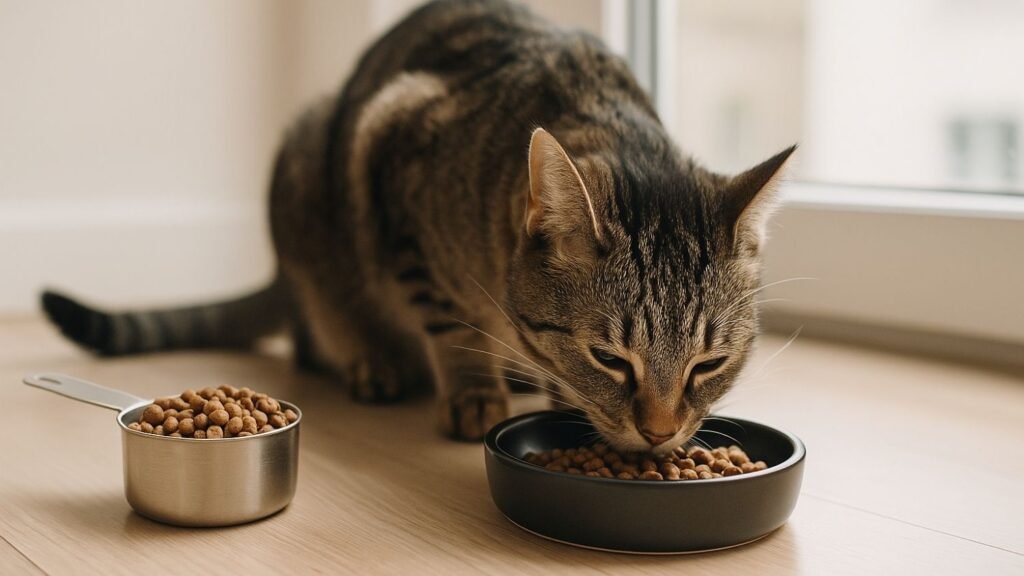
Knowing how much to feed your cat can feel confusing, especially with different brands, portion sizes, and feeding guidelines. This UK-focused guide breaks everything down clearly, helping you feed your cat the right amount every day.
Whether you’re a new cat owner or just looking to refine your cat’s routine, here’s everything you need to know.
How Much Should You Feed Your Cat Daily?
In general, most adult cats need 180–250 calories per day, depending on their weight, age, activity level, and whether they are indoor or outdoor cats.
Because food packaging varies, it’s best to think in terms of calories first and grams second.
Typical Daily Portions
These are rough guidelines for adult cats at a healthy weight:
| Cat Weight | Indoor Cat (less active) | Outdoor Cat (active) |
|---|---|---|
| 3 kg | 150–170 calories | 170–190 calories |
| 4 kg | 170–200 calories | 200–230 calories |
| 5 kg | 200–230 calories | 230–260 calories |
Always check your cat’s food label for calorie information, as wet and dry food vary dramatically.
Dry Food vs Wet Food Portions
Feeding Dry Food
Dry food is calorie-dense. Average feeding amounts:
- 40–60g per day for most adult cats
- Split across two meals
- Add a little water if your cat doesn’t drink much
Dry food is convenient but can lead to overfeeding if portions aren’t measured.
Feeding Wet Food
Wet food contains fewer calories per gram. Typical amounts:
- 2–3 pouches per day (approx. 70–90 calories each)
- Ideal for hydration and weight management
- Best served fresh and at room temperature
Many UK owners choose a mixed feeding approach — wet food for meals and a small amount of dry food left out for grazing.
Factors That Affect How Much You Should Feed Your Cat
1. Weight
Obesity is common in UK cats. If your cat is overweight:
- Reduce daily calories by 10–15%
- Switch to a light or indoor formula
- Avoid high-calorie biscuits as treats
2. Age
Cats at different life stages need different amounts:
- Kittens: 3–4 smaller meals per day, higher calories
- Adults: 2 meals per day, steady calorie intake
- Seniors: Lower calories, but higher protein and easy-to-digest foods
3. Neutered Cats
Neutered cats tend to gain weight more easily. They often need:
- 10% fewer calories
- Controlled dry food portions
- Extra playtime to stay active
4. Activity Level
Outdoor cats burn significantly more calories than indoor-only cats.
If your cat roams or hunts, they may need more food — but check their body condition regularly to avoid accidental underfeeding.
How to Read Cat Food Labels (Without the Confusion)
Most feeding tables show portions in grams or pouches, but the best thing to look for is the kcal per 100g or kcal per pouch.
Follow these steps:
- Find the calorie amount on the packaging
- Calculate your cat’s daily calorie needs (based on weight & lifestyle)
- Measure the exact portion using measuring scales
- Adjust every 2–4 weeks based on your cat’s body condition
Tip: If the packaging doesn’t show calories, check the product’s page on Amazon or the manufacturer’s website — they almost always list it online.
How Often Should You Feed Your Cat?
Most UK vets recommend:
Two Meals Per Day
- Morning and evening
- Helps prevent overeating
- Creates a predictable routine
Kittens
Require 3–4 meals per day due to their fast metabolism.
Grazers
Some cats prefer to eat little and often. If so:
- Leave out a small measured amount of dry food
- Avoid topping up the bowl — this leads to accidental overfeeding
Signs You’re Feeding Your Cat the Right Amount
Your cat is likely eating the right amount if:
- Their ribs are easily felt but not visible
- They have a nice waistline when viewed from above
- They have steady, healthy energy levels
- Their weight is stable month to month
- There’s no constant begging or frantic searching for food
If you’re unsure, most UK vets will do a free nurse weight check, which is extremely helpful.
Feeding Tips for a Happier, Healthier Cat
- Use a digital kitchen scale to measure dry food accurately
- Choose a high-quality cat food with real meat
- Avoid feeding too many treats (aim for no more than 10% of daily calories)
- Give cats wet food for hydration, especially if they rarely drink water
- Use interactive feeders to slow fast eaters
- Keep a consistent schedule — cats love routine
Conclusion
Feeding your cat the right amount isn’t complicated once you understand calories, portions, and your cat’s lifestyle. With a consistent routine and a little monitoring, you can keep your cat healthy and happy for years to come.