
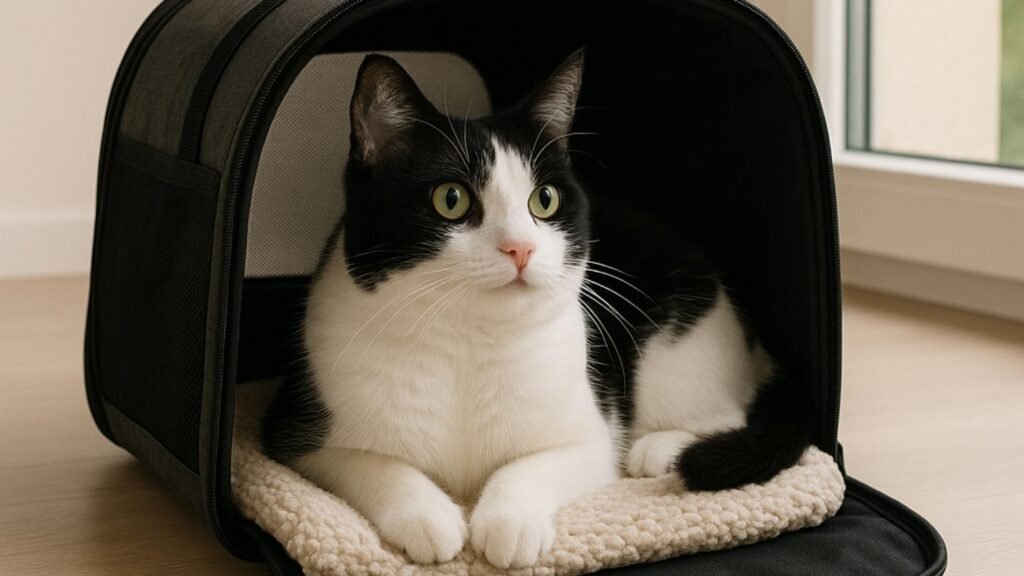
Getting your cat comfortable with their carrier is one of the best things you can do for stress-free vet visits and travel. With the right approach, your cat can learn to see the carrier as a safe, familiar place rather than something to fear.
This guide walks you through simple, positive steps to help your cat relax around — and eventually enjoy — their carrier.
Why Many Cats Fear Carriers
Most cats only see the carrier when something stressful is about to happen: a vet trip, a long journey, or a change of environment. Over time, they associate the carrier with fear and uncertainty.
Common reasons include:
- Sudden appearances of the carrier only before trips
- Loud noises or unfamiliar smells
- Being forced inside quickly
- Past negative experiences
The good news? Cats can be gently reconditioned with patience and positive reinforcement.
Step 1: Choose the Right Carrier
A comfortable carrier sets the foundation for success. Look for:
Ventilation:
Good airflow helps your cat feel secure.
Top and front entry:
Top-loading options make it easier to place your cat inside gently.
Sturdy materials:
Plastic or reinforced fabric carriers are ideal.
Removable top or sides:
Helpful for vet exams and gradual training.
If your cat already dislikes their current carrier, consider upgrading to one that feels more open and inviting.
Step 2: Make the Carrier Part of Everyday Life
Instead of hiding the carrier away, keep it in a quiet spot where your cat loves to relax. This helps them see it as a normal part of the home rather than a dreaded object.
You can:
- Leave the door open at all times
- Add a soft blanket or familiar bedding
- Place it near areas your cat already enjoys
The goal is simple: let your cat explore on their terms.
Step 3: Use Treats, Toys, and Scent
Positive associations encourage curiosity.
Try placing the following inside the carrier:
- Tasty treats
- Catnip
- A favourite toy
- A blanket that smells like you
If your cat rubs their face or cheeks on the carrier, that’s a great sign — it means they’re “claiming” it as their own.
Step 4: Feed Near or Inside the Carrier
Food is a powerful training tool.
Start by placing your cat’s food bowl next to the carrier. After a few days:
- Move the bowl just inside the doorway.
- Gradually move it deeper inside the carrier.
- Eventually, close the door briefly while they eat (only once they’re comfortable).
This slow progression helps them build confidence without feeling trapped.
Step 5: Practise Short Door Closures
Once your cat is happy to step inside, begin practising very short closures:
- Let your cat walk in voluntarily.
- Close the door for 1–2 seconds.
- Open it again and reward them.
Increase the time gradually over several days. Always stay calm and avoid sudden movements.
Step 6: Add Gentle Movements
To prepare your cat for real travel, introduce small movements:
- Lift the carrier an inch off the ground
- Set it back down
- Give a treat
- Later, take a few steps while carrying it
- Let your cat out once settled
Keep sessions short and soothing. You’re teaching them that movement doesn’t equal danger.
Step 7: Do Mini “Practice Trips”
Before the real vet appointment or travel day, complete a few car practice sessions:
- Put your cat inside the carrier calmly
- Sit in the car with the engine off
- Progress to turning the engine on
- Eventually take a short drive around the block
Reward your cat after each session with treats or gentle praise.
Extra Tips for Carrier Training
Use calming sprays
Feline pheromone sprays can help create a relaxed environment inside the carrier.
Stay calm
Cats can sense tension. If you’re relaxed, they’ll be more likely to stay calm too.
Avoid forcing your cat
Forcing creates fear and breaks trust. Slow and steady always wins with carrier training.
Regularly leave the carrier out
Even after training, keep the carrier available so your cat remains familiar with it.
Common Mistakes to Avoid
- Only bringing out the carrier before stressful events
- Pushing or shoving your cat inside
- Using the carrier as punishment
- Skipping practice trips
- Moving too quickly through training steps
Avoiding these mistakes keeps the process positive and smooth.
Conclusion
With patience and gentle encouragement, any cat can learn to feel safe and confident in their carrier. Take it slowly, use plenty of rewards, and turn the carrier into a cosy, familiar space your cat genuinely enjoys.