
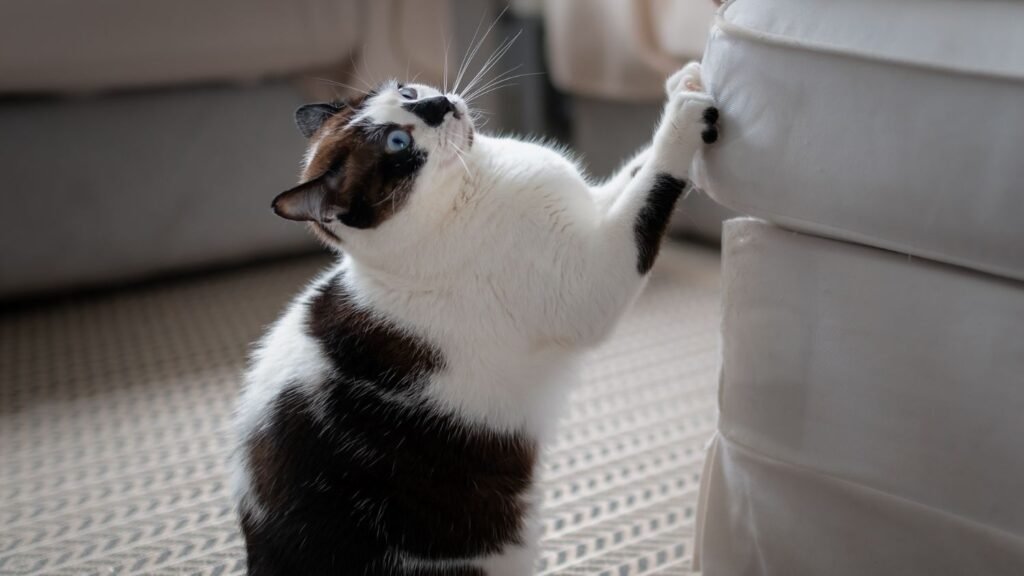
Cats scratching your furniture or carpets can be incredibly frustrating — especially when they ignore the perfectly good scratching post you bought. But scratching is a completely natural behaviour, and understanding why they do it makes it far easier to redirect.
In this UK-focused guide, we explain the main reasons behind scratching and how you can gently encourage your cat to scratch where you want instead.
Why Cats Scratch: The Real Reasons
1. It’s a Natural Way to Maintain Their Claws
Scratching helps cats shed the outer layers of their claws. It keeps them sharp and healthy — a bit like a manicure, but louder.
Without proper outlets, cats will use whatever materials feel good: sofas, carpets, chairs and door frames.
2. It’s an Important Form of Stretching
When cats scratch, they’re also stretching their shoulders, legs and back. It’s a full-body movement that keeps their muscles flexible.
This is why vertical surfaces, like sofa arms or door frames, are so tempting.
3. Scratching Marks Territory
Cats have scent glands in their paws. When they scratch, they leave both visual marks and scent marks — a double message to other animals: “This spot is mine.”
Indoor-only cats still instinctively mark territory even if there’s no competition.
4. Scratching Helps Release Stress
Scratching can be a self-soothing behaviour. Big emotions — excitement, stress, frustration — often lead to scratching sessions.
If your cat scratches more when visitors come over or when you’re gone for longer periods, this may be why.
Why Cats Scratch Furniture and Carpets Specifically
1. The Texture Is Irresistible
From a cat’s perspective, your sofa or carpet may feel perfect under their claws. Woven fabrics, looped carpets and textured armrests are especially tempting.
2. The Location Is Prime Territory
Cats choose high-traffic or central areas because:
- They want their scent where you spend time
- They want to be seen (scratching is communication)
- They prefer scratching where you interact with them
This is why hiding a scratching post in a corner often fails.
3. The Scratching Post Isn’t Right
Most scratching posts are:
- Too short
- Too flimsy
- Covered with the wrong material
Cats need something tall, sturdy and satisfying — otherwise, the sofa wins every time.
How to Redirect Cat Scratching (UK-Friendly Tips)
1. Provide Better Scratching Options
A good scratching post or tower must be:
- Tall — at least 70–90cm high
- Sturdy — won’t wobble when leaned on
- Textured — sisal rope or sisal fabric is ideal
Consider having a mix of:
- Vertical scratchers
- Horizontal scratchers
- Angled scratchers
Many UK cat owners find success with heavier, wooden-base scratchers from Amazon UK.
2. Place Scratchers Strategically
The biggest mistake people make is placement.
Put scratchers:
- Near the furniture they’re currently using
- In high-traffic areas
- Right by sleeping spots (cats love a post-nap stretch)
You can gradually move the scratcher later — but start where your cat already prefers.
3. Make Furniture Less Appealing
You can reduce unwanted scratching by using:
- Throw blankets over the targeted area
- Double-sided tape (cats dislike sticky textures)
- Furniture protectors (transparent plastic sheets)
- Citrus sprays — cats often avoid citrus scents
These are temporary tools to break the habit.
4. Use Attractants to Encourage Proper Scratching
Catnip spray or silvervine can help lure your cat to their new scratching area. Many UK scratcher brands include catnip sachets for this reason.
Sprinkle or spray on:
- Scratch posts
- Scratch mats
- Cat trees
Reapply weekly for best results.
5. Reward Good Behaviour
When your cat uses the new scratcher:
- Praise them warmly
- Offer a treat
- Give gentle fuss or playtime
Cats repeat behaviours that get positive attention.
6. Clip Claws Regularly
If your cat allows it, a quick trim every 2–3 weeks reduces damage from accidental scratches.
Indoor cats especially benefit from claw maintenance. If you struggle, your local vet or groomer can help.
7. Avoid Punishment
Never shout, spray water or physically stop your cat — it creates stress, which can lead to more scratching.
Redirection and positive reinforcement work far better.
When Scratching Is Excessive
If your cat is suddenly scratching far more than usual, consider:
- A change in household routine
- A new pet or baby
- Boredom or lack of enrichment
- Anxiety triggers (construction noise, visitors)
Providing more playtime, puzzle feeders and environmental enrichment often helps.
If the behaviour changes drastically, a quick vet check can rule out discomfort-related causes.
Conclusion
Scratching is a normal and healthy behaviour for cats — but with the right tools and guidance, you can easily redirect it away from your furniture. Provide appealing alternatives, reward good habits and make the wrong spots less tempting, and most cats adapt quickly.