
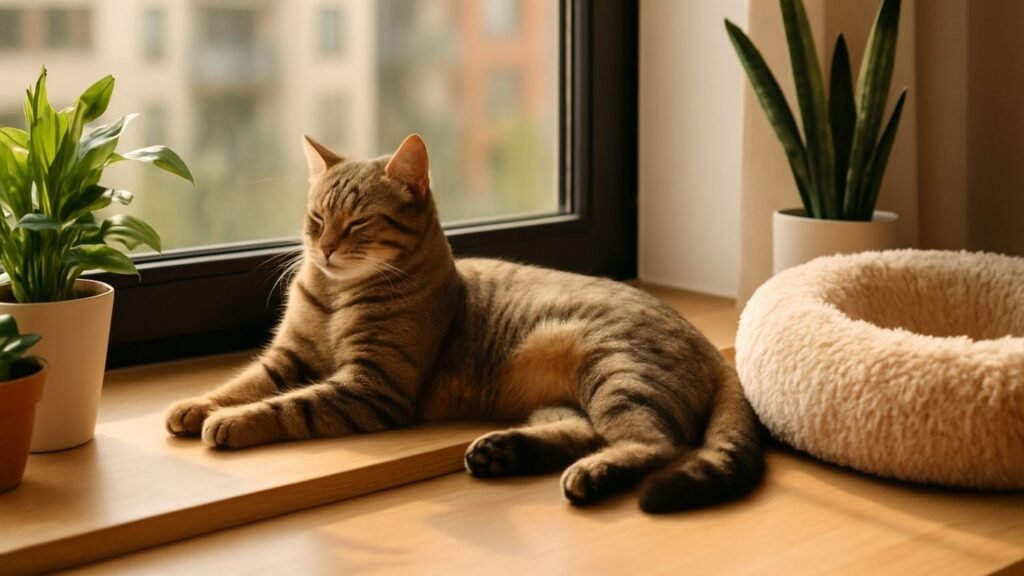
Creating a cat-friendly apartment doesn’t require a huge amount of space — just thoughtful planning. With the right setup, your flat can become a safe, enriching, and comfortable environment your cat will genuinely love.
In this guide, we’ll walk through the essentials every UK cat owner should consider, from layout and enrichment to safety and product recommendations.
Why Your Apartment Layout Matters for Your Cat
Cats navigate their world vertically as much as horizontally. Even in smaller spaces, giving them the right mix of climbing spots, quiet zones, and play areas helps reduce stress and keeps them mentally stimulated.
A well-designed cat-friendly apartment should balance three things:
- Safety
- Comfort
- Enrichment
Let’s break down how to make that happen.
Space Planning for a Cat-Friendly Flat
Even if you’re in a compact London studio or a cosy Manchester apartment, smart space planning makes all the difference.
Create Vertical Space
Cats instinctively seek high perches to feel safe and in control. Try adding:
- Wall-mounted shelves
- A tall cat tree
- Window perches
- The top of sturdy furniture (bookshelves, wardrobes)
Tip: Make sure shelves or climbing areas are secure. A wobbly platform is the quickest way to make a cat lose confidence in their environment.
Provide Safe Hiding Spots
Every cat needs places where they can retreat and decompress. Easy options include:
- Covered cat beds
- Igloo-style hideaways
- Soft carriers left open
- A cardboard box with a cosy blanket
Hiding places help reduce anxiety during noisy events, visitors, or fireworks season.
Use Windows as “Cat TV”
Windows are natural enrichment sources. If you can, place:
- A window bed or hammock
- A tall scratching post beside a windowsill
- A bird feeder outside (on a neighbour-friendly schedule)
This gives your cat endless visual stimulation without extra clutter in your flat.
Essential Cat Enrichment in Small Spaces
Just because your apartment is compact doesn’t mean enrichment needs to be minimal. Cats thrive on mental and physical engagement.
Interactive Toys
Rotate toys to keep your cat interested. Consider:
- Feather wands
- Laser pointers
- Puzzle feeders
- Automatic toys for when you’re at work
Puzzle feeders are especially useful in UK flats where outdoor access is limited — they slow down eating and keep cats entertained.
Scratching Options
Scratching isn’t optional for cats. If you don’t provide suitable targets, your sofa will become one.
Good scratching solutions include:
- Vertical sisal posts
- Horizontal cardboard scratchers
- Wall-mounted scratching boards
Place scratchers near entrances and common pathways where cats naturally mark territory.
Rotate Playtime
Small apartments can quickly feel repetitive. Try:
- 10 minutes of daily wand play
- Setting up a weekly “new smells box” (catnip, silvervine, herbs in safe containers)
- Rearranging safe furniture occasionally to create new hiding spots or pathways
Cats enjoy small, meaningful changes — not complete chaos.
Creating a Safe Environment
Safety is crucial, especially if you’re renting or living in a high-rise.
Secure Your Windows and Balconies
Even indoor cats can slip through small openings. Consider:
- Window screens
- Lockable restrictors
- Secure balcony netting (if permitted by your landlord)
Never rely on a cat’s balance alone — accidents can happen.
Hide or Protect Cables
Kittens and energetic adults love chewing. To reduce hazards:
- Use cable covers
- Hide wires behind furniture
- Choose cordless blinds when possible
This protects both your cat and your deposit.
Check for Toxic Plants
Many popular houseplants are dangerous to cats. Avoid lilies, ivy, philodendrons, and aloe vera. Safe alternatives include:
- Spider plants
- Boston ferns
- Areca palms
- Cat grass
Always double-check when adding a new plant to your space.
Litter Box Setup for Apartments
Proper litter placement makes a huge difference, especially in smaller living spaces.
Choose the Right Litter Box
For apartments, aim for:
- Enclosed boxes to reduce odours
- Top-entry boxes if you need to limit tracking
- XL trays for larger breeds
If space is tight, consider dual-purpose furniture with integrated litter storage.
Best Placement in Flats
Place your litter box:
- Away from food and water
- In a quiet but accessible corner
- Somewhere with good ventilation (bathrooms are an option if your cat is comfortable)
Avoid cupboard spaces unless they have airflow — odours can build up quickly.
Small Additions That Make a Big Difference
Sometimes tiny changes have the biggest impact.
Quick Wins:
- Add soft blankets to favourite napping spots
- Place a scratching post near your bed or sofa
- Use plug-in pheromones (Feliway) during stressful periods
- Install a cat flap into an interior door for easy access to a designated cat room
These small tweaks help your cat feel at home while keeping your flat tidy.
Conclusion
With thoughtful planning, even the smallest UK apartment can become the perfect cat-friendly home. Focus on safety, enrichment, and comfort, and your cat will thrive in their indoor environment.