
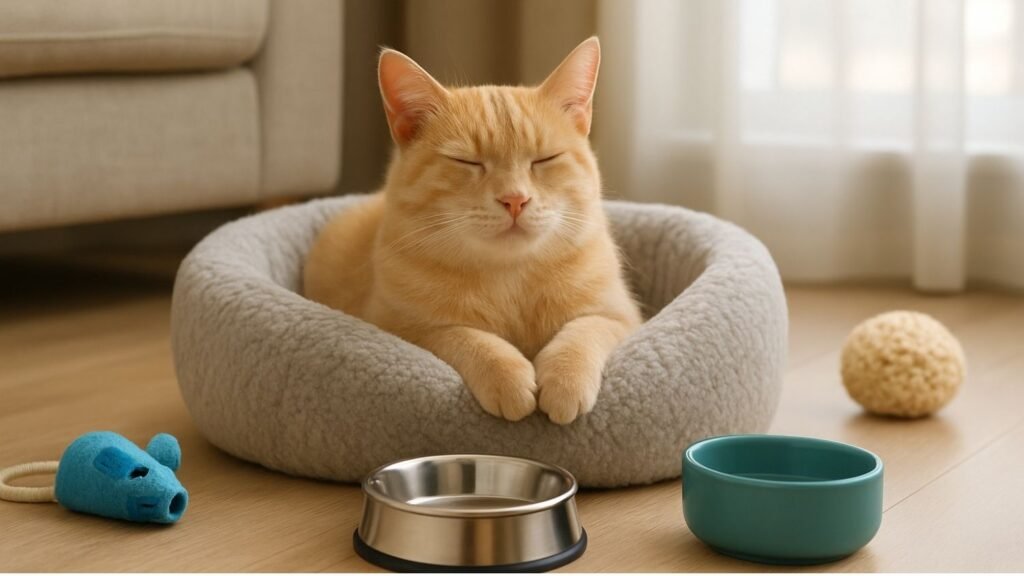
As cat owners, we all want our pets to enjoy clean, safe, and comfortable essentials. But how often should you
replace things like toys, bowls, and beds? The answer isn’t always obvious — especially when cats can be quite
attached to their favourite items. This guide breaks down typical replacement timelines, what signs to look for,
and how to choose long-lasting cat products.
Why Replacement Matters
Regularly updating your cat’s everyday items is about more than aesthetics. It affects:
- Hygiene – Old bowls and beds can harbour bacteria.
- Safety – Damaged toys may pose choking risks.
- Comfort – Worn-out beds and fabrics don’t support joints as well.
- Behaviour – Fresh toys can reduce boredom, anxiety, and unwanted scratching.
Looking after these essentials helps maintain your cat’s health and enriches their environment.
How Often Should You Replace Cat Toys?
Most cat toys don’t last forever – especially if your cat plays rough or loves to chew.
General Replacement Timeline: Every 3–6 Months
This depends on the toy type, material quality, and your cat’s play style. More destructive cats may need
replacements sooner.
Toys that Usually Need More Frequent Changing
- Feather wands: Replace every 1–2 months or sooner if feathers fall out.
- String toys: Replace if fraying occurs (strings are a swallowing hazard).
- Soft plush toys: Replace every 3–4 months, especially if ripped or soaked with saliva.
- Catnip toys: Refresh or replace every 2 months as the scent fades.
Signs It’s Time to Replace a Toy
- Loose pieces or exposed stuffing
- Frayed strings or threads
- Damaged plastic
- Strong smells even after cleaning
- Loss of interest (catnip or silvervine freshness is gone)
Tips to Make Toys Last Longer
- Rotate toys weekly to prevent boredom.
- Store string toys out of reach after play.
- Clean plastic toys with warm soapy water.
- Refresh catnip toys by refilling them if possible.
How Often Should You Replace Cat Bowls?
Food and water bowls are often overlooked, but they play a major role in hygiene.
General Replacement Timeline: Every 6–12 Months
Cat bowls are subject to scratches, mineral deposits, odours, and bacterial build-up — even with regular washing.
Best Materials for Bowls
- Stainless steel (most hygienic)
- Ceramic (non-porous, but can chip)
- Glass (easy to clean, but breakable)
Avoid plastic bowls whenever possible. They scratch easily and can contribute to feline acne due to bacteria
collecting in those tiny grooves.
Signs It’s Time to Replace Bowls
- Scratches on the interior surface
- Persistent odour
- Stains or difficulty cleaning properly
- Chips in ceramic or glass
- Slime build-up that returns quickly
Cleaning Routine
- Daily: Wash food bowls.
- Daily or every 2 days: Refresh and clean water bowls.
- Weekly: Deep clean using hot water and pet-safe detergent.
Even with excellent maintenance, bowls naturally wear out — replacing them annually is a small but important step for
your cat’s health.
How Often Should You Replace Cat Beds?
Cats spend around 12–16 hours a day snoozing, so beds take a lot of wear.
General Replacement Timeline: Every 1–2 Years
Quality beds can last longer, but fabric and filling naturally break down over time.
Why Beds Need Replacing
- Oils from fur accumulate.
- Fabric becomes compressed.
- Odours become harder to remove.
- Allergens and dust mites collect.
- Supportiveness decreases.
Some beds have removable covers, which helps extend their lifespan, but the internal padding will eventually flatten.
Signs It’s Time for a New Cat Bed
- Your cat stops using it.
- Persistent or musty smells.
- Lumps or flattened areas.
- Excessive shedding embedded in the fabric.
- Wear and tear such as rips or loose stitching.
Cleaning Tips to Extend Bed Life
- Wash removable covers every 2–3 weeks.
- Use a handheld hoover to remove hair before washing.
- Air out the bed in sunlight to help kill bacteria.
- Use a waterproof liner for memory foam beds.
Replacing the bed at the right time keeps your cat comfortable and improves overall hygiene.
Summary of Replacement Timelines
- Cat Toys: Every 3–6 months (more often for damaged toys).
- Cat Bowls: Every 6–12 months.
- Cat Beds: Every 1–2 years.
Conclusion
Keeping your cat’s essentials fresh is one of the simplest ways to support their wellbeing. By checking toys, bowls,
and beds regularly, you’ll help ensure a safe, clean, and comfortable environment for your pet. A few thoughtful
replacements each year can make a big difference in their daily life.